


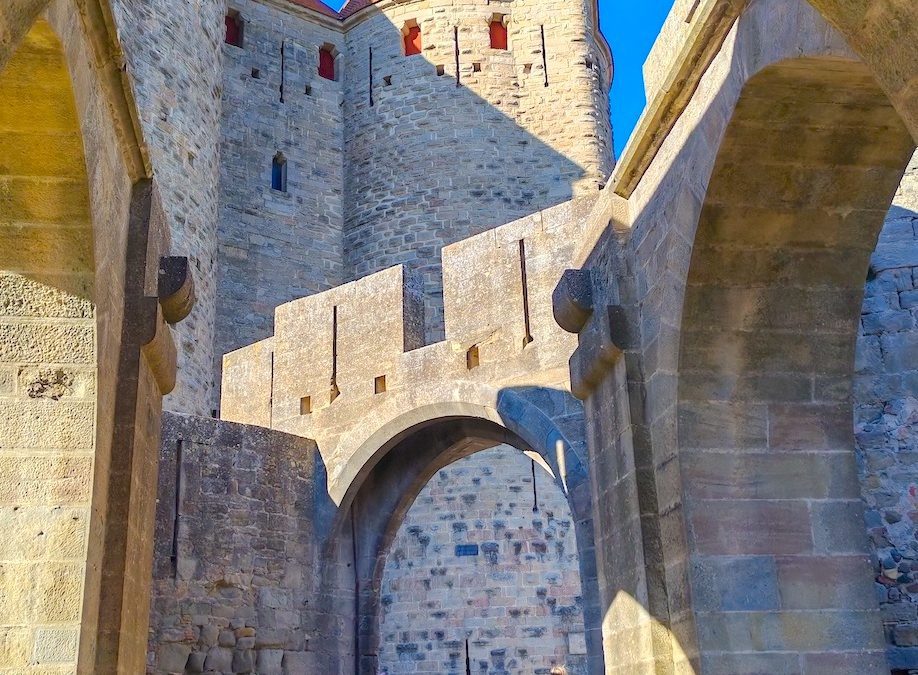
Rising from the flatlands of southern France, 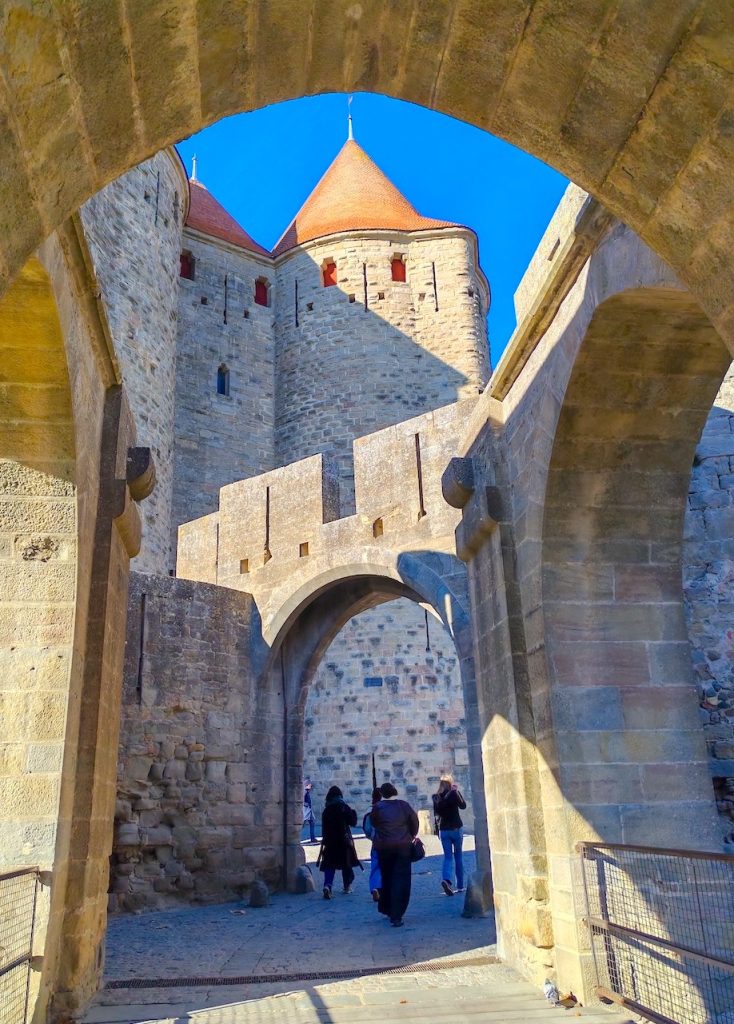
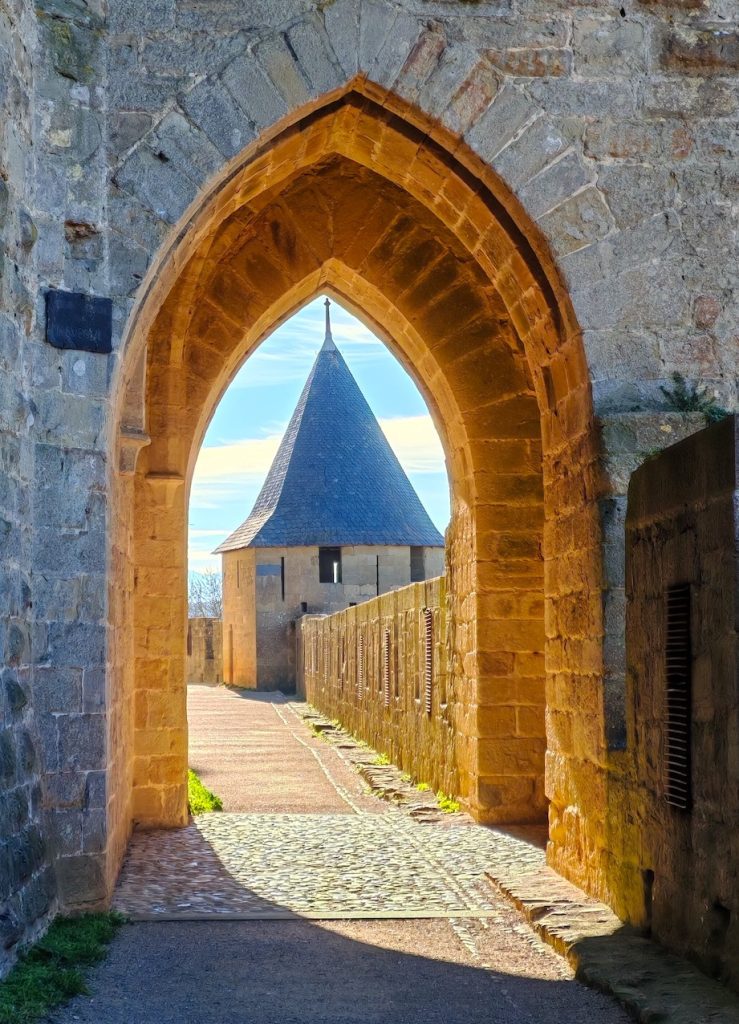
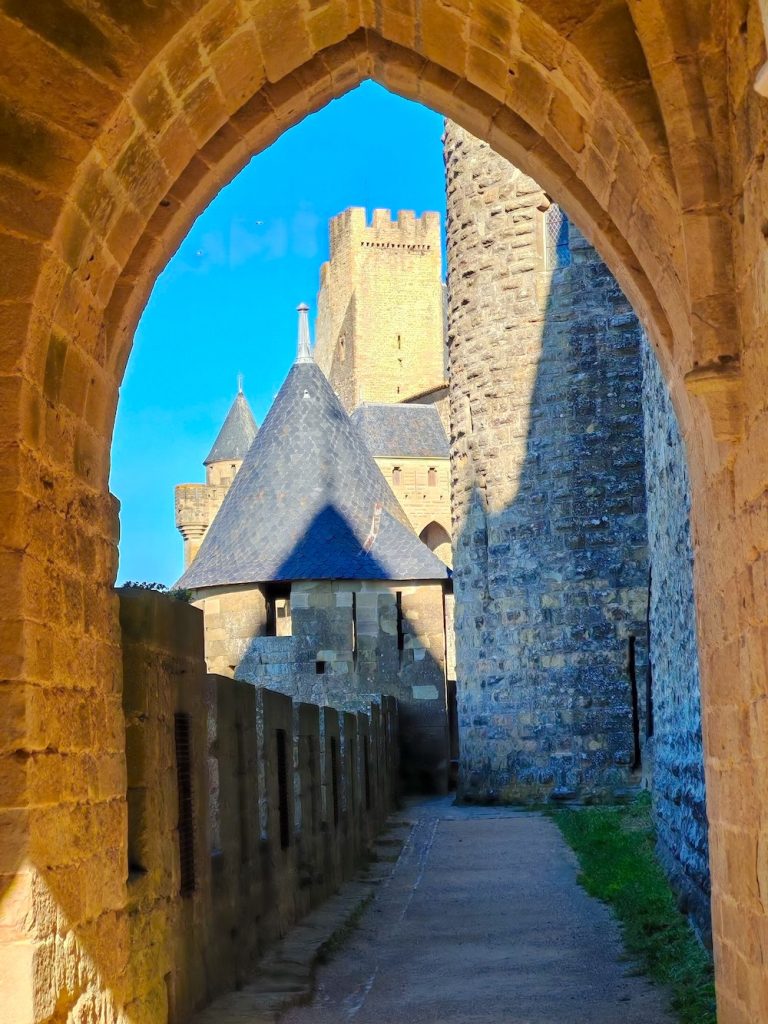
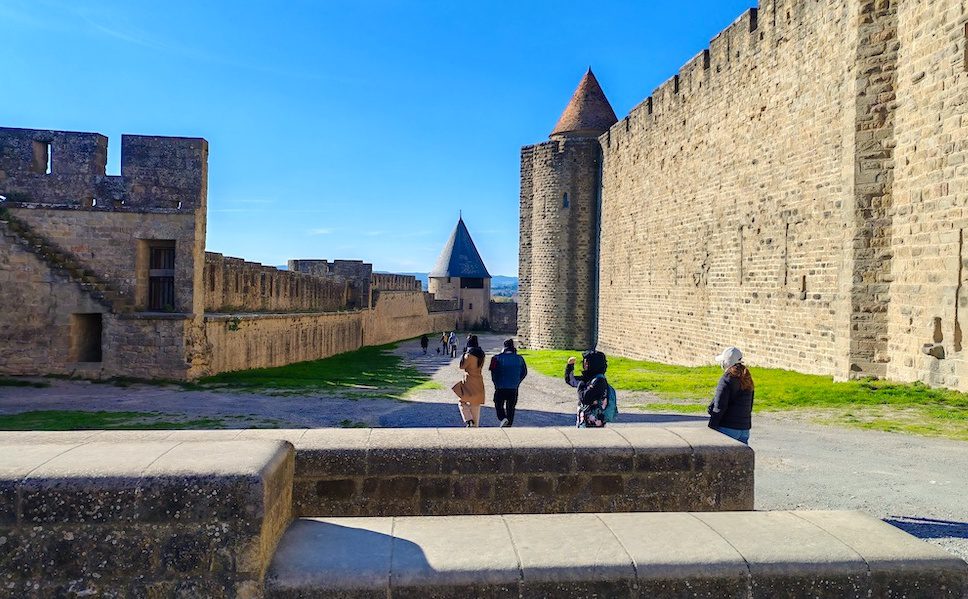
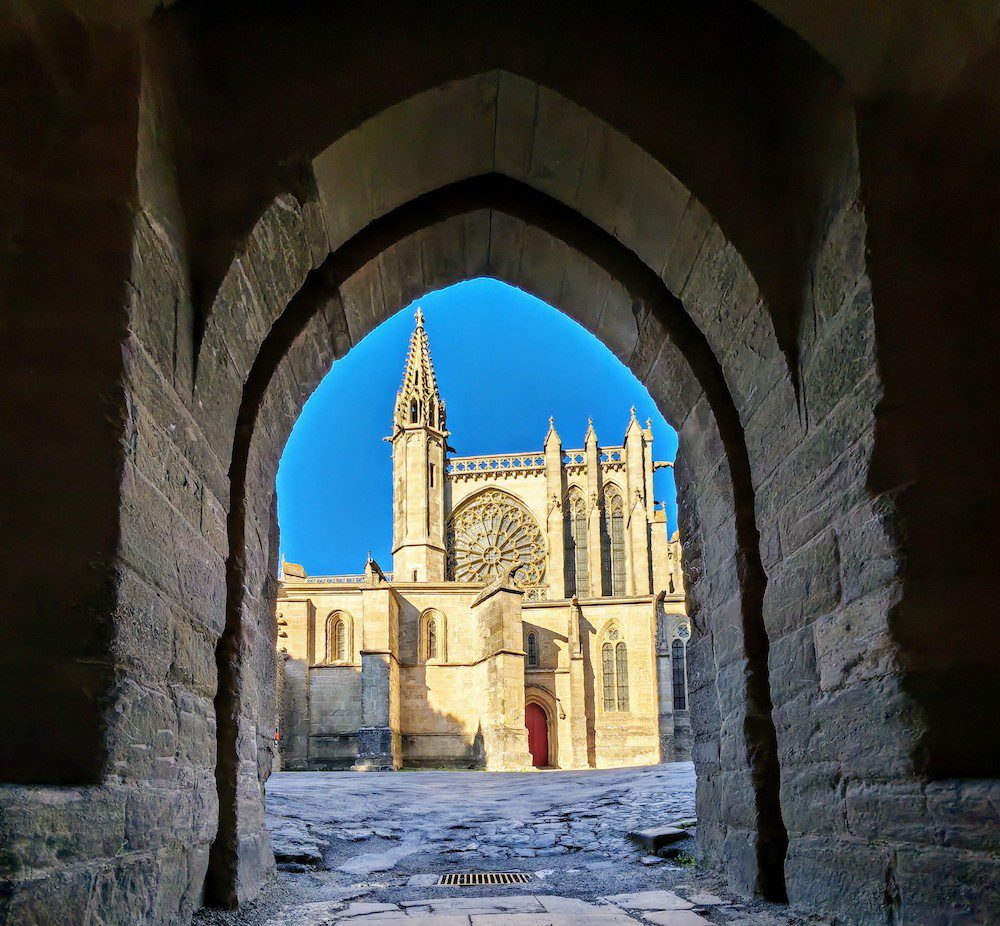
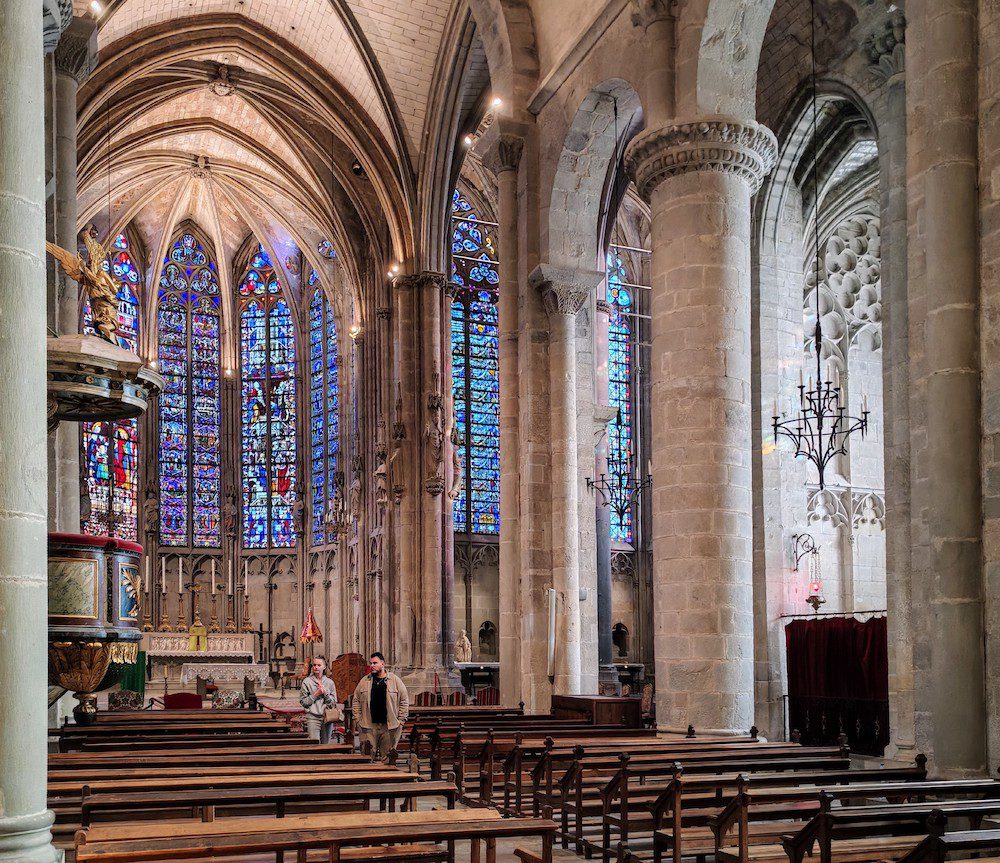
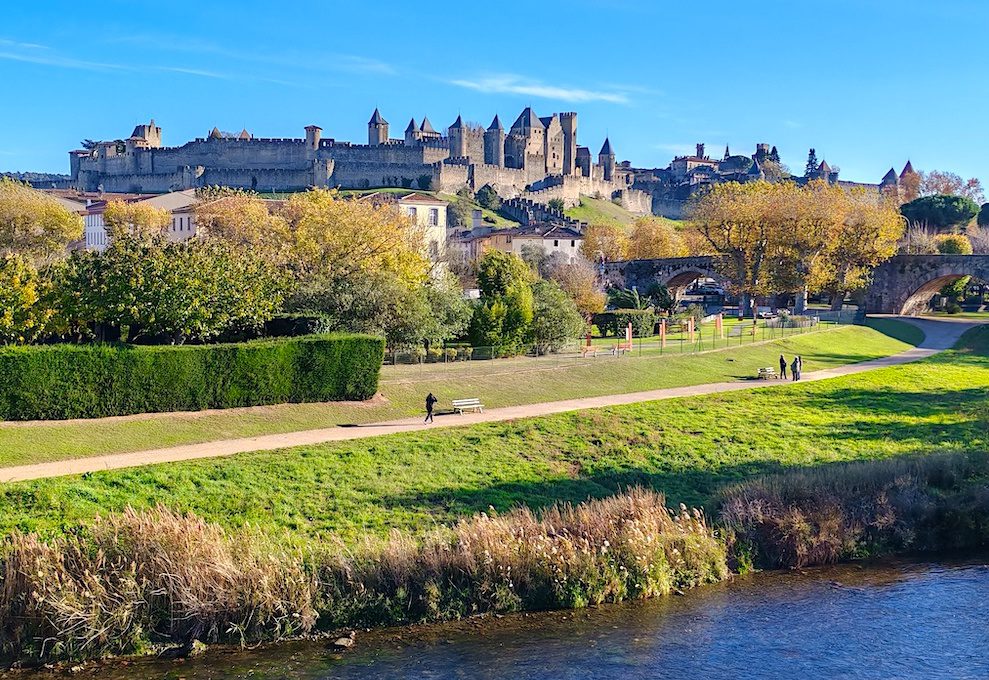 appears almost unreal — a stone city suspended in time, encircled by double walls and crowned with towers that seem drawn from a forgotten story.
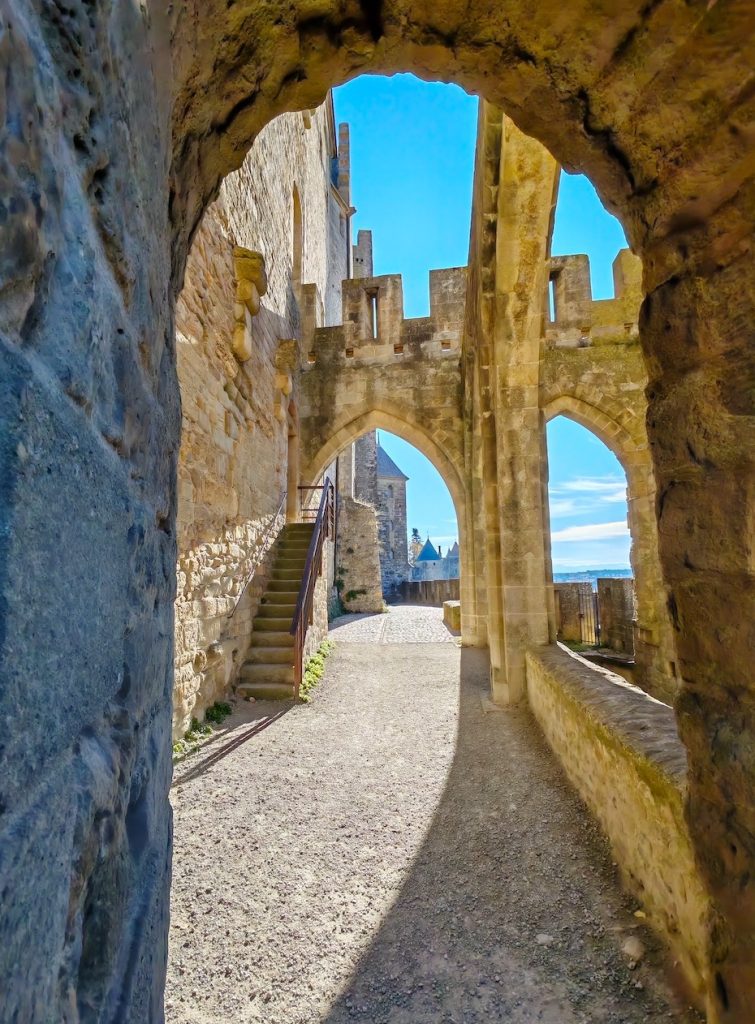
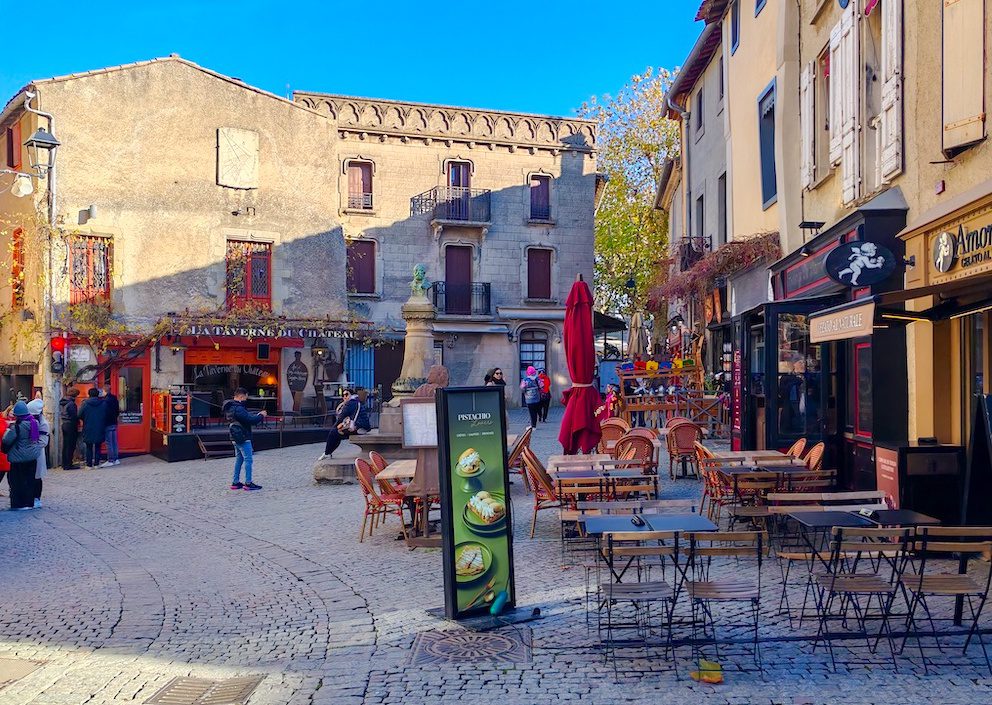
Crossing into the old citadel, the noise of the present fades quickly. Narrow cobbled lanes wind between weathered façades, where flags move softly in the wind and footsteps echo against centuries of stone. There is a feeling here of both strength and stillness — as if the city is remembering itself rather than performing for visitors.
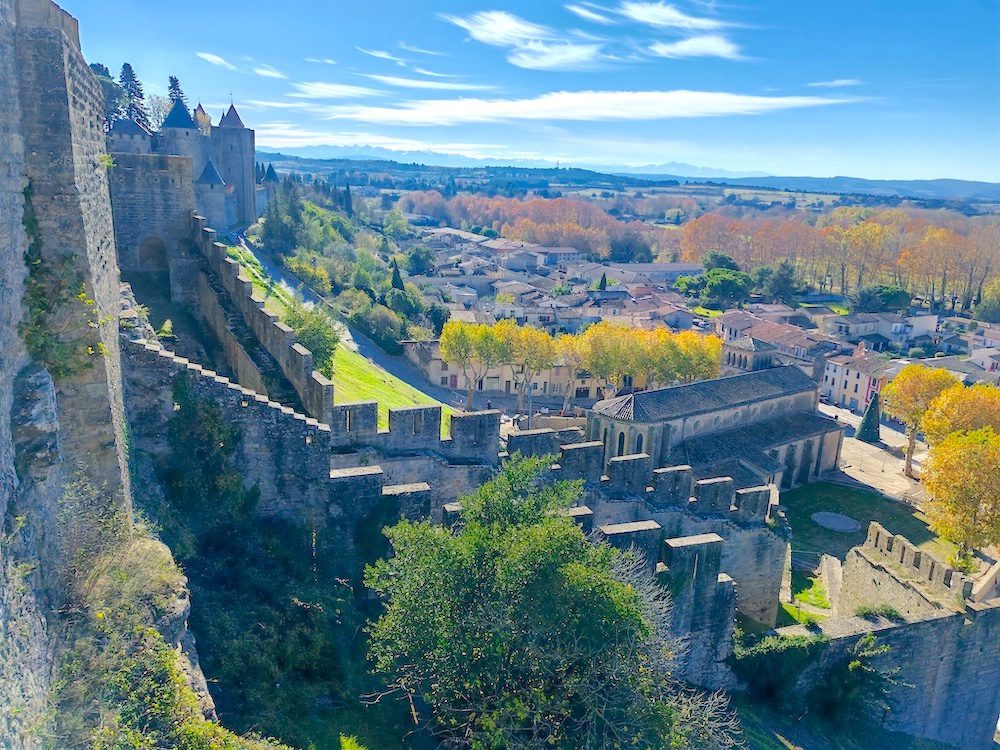
From the ramparts, the view opens across the Aude valley, wide and quiet, stretching toward distant hills. The light shifts slowly over the landscape, softening the edges of towers and rooftops, and for a moment everything feels suspended — past and present existing side by side.
At dusk, Carcassonne becomes even more intimate. Lanterns glow along the walls, and the fortress takes on a warm, golden tone. It is easy to imagine it unchanged for hundreds of years, holding its silence while the world outside moves on.
Carcassonne is not only a place to see — it is a place to pause, to walk slowly, and to feel the weight of time in stone.